Character vs. Nature
Character vs. Nature
Test how “Character” and “Nature” look in your own writing.
Character
Term A(countable) A being involved in the action of a story.
(countable) A distinguishing feature; characteristic; trait; phene.
Example: ‘A single locus governing the petal colour character was detected on the linkage group A2.’;
A complex of traits marking a person, group, breed, or type.
Example: ‘A study of the suspect's character and his cast iron alibi ruled him out.’;
(uncountable) Strength of mind; resolution; independence; individuality; moral strength.
Example: ‘He has a great deal of character.’; ‘"You may not like to eat liver," said Calvin's father, "but it builds character."’;
(countable) A unique or extraordinary individual; a person characterized by peculiar or notable traits, especially charisma.
Example: ‘Julius Caesar is a great historical character.’; ‘That bloke is such a character.’;
(countable) A written or printed symbol, or letter.
Style of writing or printing; handwriting; the particular form of letters used by a person or people.
Example: ‘an inscription in the Runic character’;
A secret cipher; a way of writing in code.
One of the basic elements making up a text file or string: a code representing a printing character or a control character.
A person or individual, especially one who is unknown or raises suspicions.
Example: ‘We saw a shady character slinking out of the office with some papers.’; ‘That old guy is a real character.’;
A complex number representing an element of a finite Abelian group.
(countable) Quality, position, rank, or capacity; quality or conduct with respect to a certain office or duty.
Example: ‘in the miserable character of a slave’; ‘in his character as a magistrate’;
The estimate, individual or general, put upon a person or thing; reputation.
Example: ‘a man's character for truth and veracity’; ‘Her actions give her a bad character.’;
A reference given to a servant, attesting to his/her behaviour, competence, etc.
Personal appearance.
(obsolete) To write (using characters); to describe.
A distinctive mark; a letter, figure, or symbol.
Example: ‘It were much to be wished that there were throughout the world but one sort of character for each letter to express it to the eye.’;
Style of writing or printing; handwriting; the peculiar form of letters used by a particular person or people; as, an inscription in the Runic character.
Example: ‘You know the character to be your brother's?’;
The peculiar quality, or the sum of qualities, by which a person or a thing is distinguished from others; the stamp impressed by nature, education, or habit; that which a person or thing really is; nature; disposition.
Example: ‘The character or that dominion.’; ‘Know well each Ancient's proper character;His fable, subject, scope in every page;Religion, Country, genius of his Age.’; ‘A man of . . . thoroughly subservient character.’;
Strength of mind; resolution; independence; individuality; as, he has a great deal of character.
Moral quality; the principles and motives that control the life; as, a man of character; his character saves him from suspicion.
Quality, position, rank, or capacity; quality or conduct with respect to a certain office or duty; as, in the miserable character of a slave; in his character as a magistrate; her character as a daughter.
The estimate, individual or general, put upon a person or thing; reputation; as, a man's character for truth and veracity; to give one a bad character.
Example: ‘This subterraneous passage is much mended since Seneca gave so bad a character of it.’;
A written statement as to behavior, competency, etc., given to a servant.
A unique or extraordinary individuality; a person characterized by peculiar or notable traits; a person who illustrates certain phases of character; as, Randolph was a character; Cæsar is a great historical character.
One of the persons of a drama or novel.
To engrave; to inscribe.
Example: ‘These trees shall be my books.And in their barks my thoughts I 'll character.’;
To distinguish by particular marks or traits; to describe; to characterize.
an imaginary person represented in a work of fiction (play or film or story);
Example: ‘she is the main character in the novel’;
a characteristic property that defines the apparent individual nature of something;
Example: ‘each town has a quality all its own’; ‘the radical character of our demands’;
the inherent complex of attributes that determine a persons moral and ethical actions and reactions;
Example: ‘education has for its object the formation of character’;
an actor's portrayal of someone in a play;
Example: ‘she played the part of Desdemona’;
a person of a specified kind (usually with many eccentricities);
Example: ‘a real character’; ‘a strange character’; ‘a friendly eccentric’; ‘the capable type’; ‘a mental case’;
good repute;
Example: ‘he is a man of character’;
a formal recommendation by a former employer to a potential future employer describing the person's qualifications and dependability;
Example: ‘requests for character references are all to often answered evasively’;
a written symbol that is used to represent speech;
Example: ‘the Greek alphabet has 24 characters’;
engrave or inscribe characters on
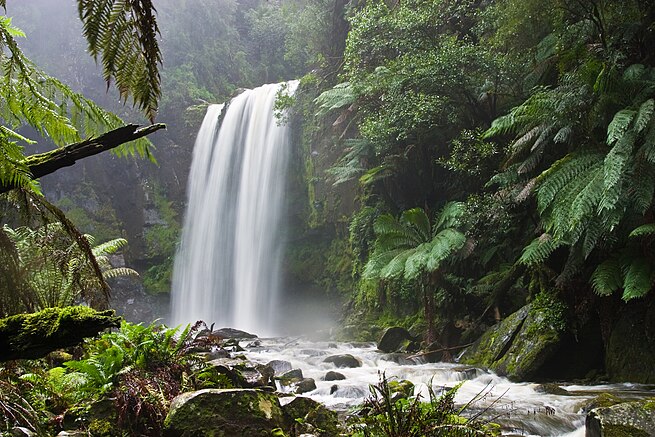
Nature
Term B(uncountable) The natural world; that which consists of all things unaffected by or predating human technology, production, and design. E.G. the ecosystem, the natural environment, virgin ground, unmodified species, laws of nature.
Example: ‘Nature never lies (i.e. tells untruths).’;
The innate characteristics of a thing. What something will tend by its own constitution, to be or do. Distinct from what might be expected or intended.
The summary of everything that has to do with biological, chemical and physical states and events in the physical universe.
Conformity to that which is natural, as distinguished from that which is artificial, or forced, or remote from actual experience.
Kind, sort; character; quality.
(obsolete) Physical constitution or existence; the vital powers; the natural life.
(obsolete) Natural affection or reverence.
(obsolete) To endow with natural qualities.
The existing system of things; the universe of matter, energy, time and space; the physical world; all of creation. Contrasted with the world of mankind, with its mental and social phenomena.
Example: ‘But looks through nature up to nature's God.’; ‘When, in the course of human Events, it becomes necessary for one People to dissolve the Political Bonds which have connected them with another, ans to assume among the powers of the earth the separate and equal Station which the Laws of Nature and of Nature's God entitle them, a decent Respect to the Opinions of Mankind requires that they should declare the causes that impel them to the Separation.’; ‘Nature has caprices which art can not imitate.’;
The personified sum and order of causes and effects; the powers which produce existing phenomena, whether in the total or in detail; the agencies which carry on the processes of creation or of being; - often conceived of as a single and separate entity, embodying the total of all finite agencies and forces as disconnected from a creating or ordering intelligence; as, produced by nature; the forces of nature.
Example: ‘I oft admireHow Nature, wise and frugal, could commitSuch disproportions.’;
The established or regular course of things; usual order of events; connection of cause and effect.
Conformity to that which is natural, as distinguished from that which is artificial, or forced, or remote from actual experience.
Example: ‘One touch of nature makes the whole world kin.’;
The sum of qualities and attributes which make a person or thing what it is, as distinct from others; native character; inherent or essential qualities or attributes; peculiar constitution or quality of being.
Example: ‘Thou, therefore, whom thou only canst redeem,Their nature also to thy nature join,And be thyself man among men on earth.’;
Kind, sort; character; quality.
Example: ‘A dispute of this nature caused mischief.’;
Physical constitution or existence; the vital powers; the natural life.
Example: ‘Oppressed nature sleeps.’;
Natural affection or reverence.
Example: ‘Have we not seenThe murdering son ascend his parent's bed,Through violated nature force his way?’;
Constitution or quality of mind or character.
Example: ‘A born devil, on whose natureNurture can never stick.’; ‘That reverence which is due to a superior nature.’;
To endow with natural qualities.
Example: ‘He [God] which natureth every kind.’;
the essential qualities or characteristics by which something is recognized;
Example: ‘it is the nature of fire to burn’; ‘the true nature of jealousy’;
a causal agent creating and controlling things in the universe;
Example: ‘the laws of nature’; ‘nature has seen to it that men are stronger than women’;
the natural physical world including plants and animals and landscapes etc.;
Example: ‘they tried to preserve nature as they found it’;
the complex of emotional and intellectual attributes that determine a person's characteristic actions and reactions;
Example: ‘it is his nature to help others’;
a particular type of thing;
Example: ‘problems of this type are very difficult to solve’; ‘he's interested in trains and things of that nature’; ‘matters of a personal nature’;
the phenomena of the physical world collectively, including plants, animals, the landscape, and other features and products of the earth, as opposed to humans or human creations
Example: ‘the breathtaking beauty of nature’;
the physical force regarded as causing and regulating the phenomena of the world
Example: ‘it is impossible to change the laws of nature’;
the basic or inherent features, character, or qualities of something
Example: ‘helping them to realize the nature of their problems’; ‘there are a lot of other documents of that nature’;
the innate or essential qualities or character of a person or animal
Example: ‘it's not in her nature to listen to advice’; ‘I'm not violent by nature’;
inborn or hereditary characteristics as an influence on or determinant of personality.
a person of a specified character
Example: ‘Emerson was so much more luminous a nature’;
Nature, in the broadest sense, is the natural, physical, material world or universe. can refer to the phenomena of the physical world, and also to life in general.
Example: ‘Nature’;
Upgrade to Grammarchecker.io Premium
Unlock 10 AI rewriting modes, unlimited word paraphrasing, executive fluency feedback, and deep plagiarism checking for your essays, papers, and emails.